
A fillet weld is a type of weld that is used to join two metallic components, typically at right angles to each other, forming an L shape.
The weld is triangular in shape and may have a concave, flat or convex surface depending on the welder’s technique.
It is one of the most common types of welds and is widely used in a variety of industries including: automotive, marine and construction.
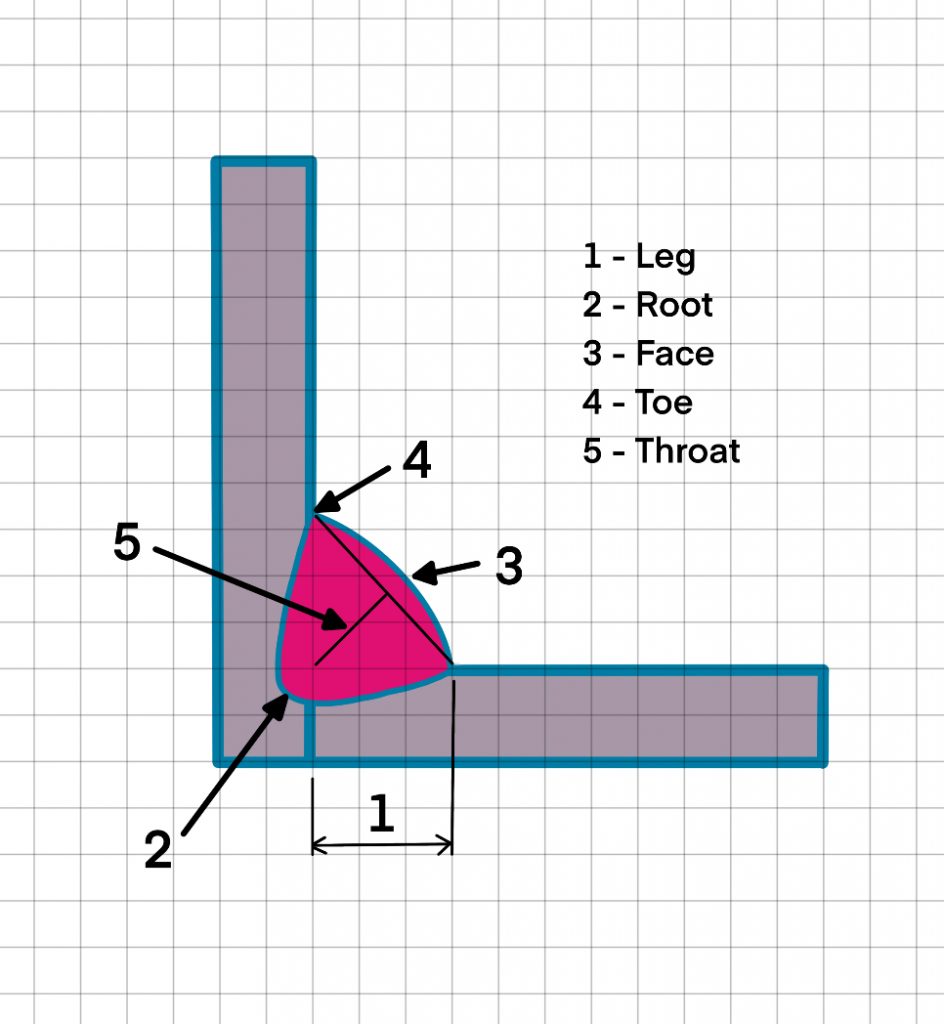
The critical dimension of a fillet weld is the throat (t). However in some standards a fillet weld can be described by its leg length (s).
Care must be taken to ensure the correct dimension is used in the following sizing calculations.
Best Practice/Rule of Thumb
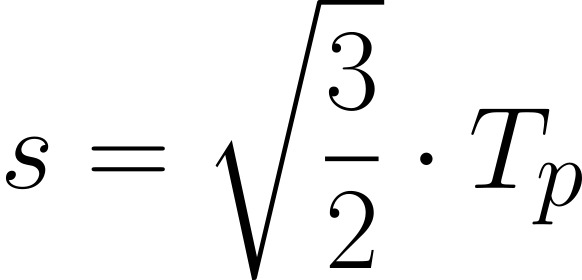
A fillet weld will typically fail in shear across the throat of the weld (t). In order to achieve a full strength weld we would recommend starting your calculations with a weld leg size of:
The fillet weld throat thickness can then be calculated as:
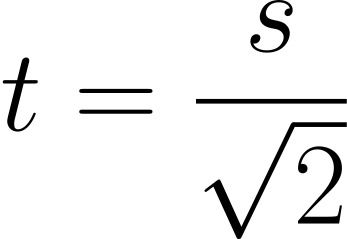
s=weld leg size
Tensile Load Case
For all the calculations below we have considered a double sized fillet weld connection. If the fillet weld of length L, is loaded by the applied force P the corresponding stress would be:
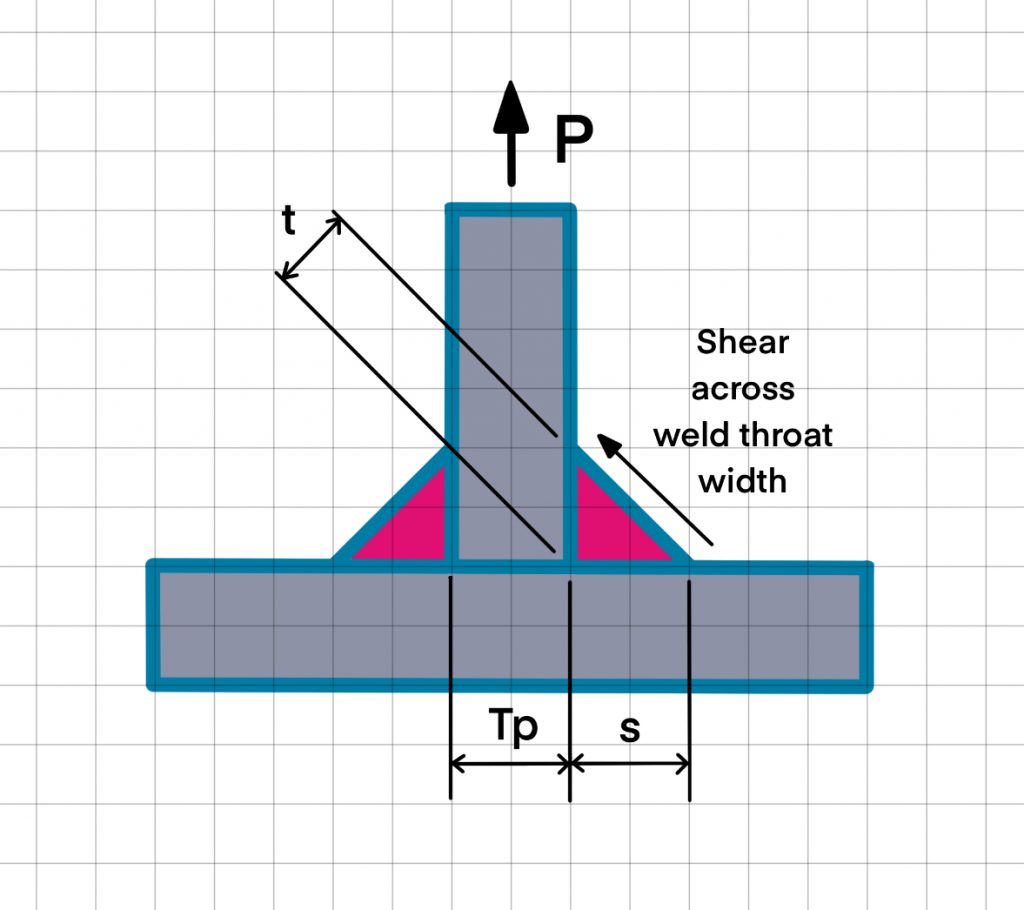
Shear stress across weld:
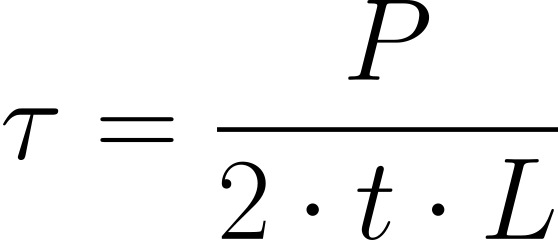
L=length of weld
Bending Load Case
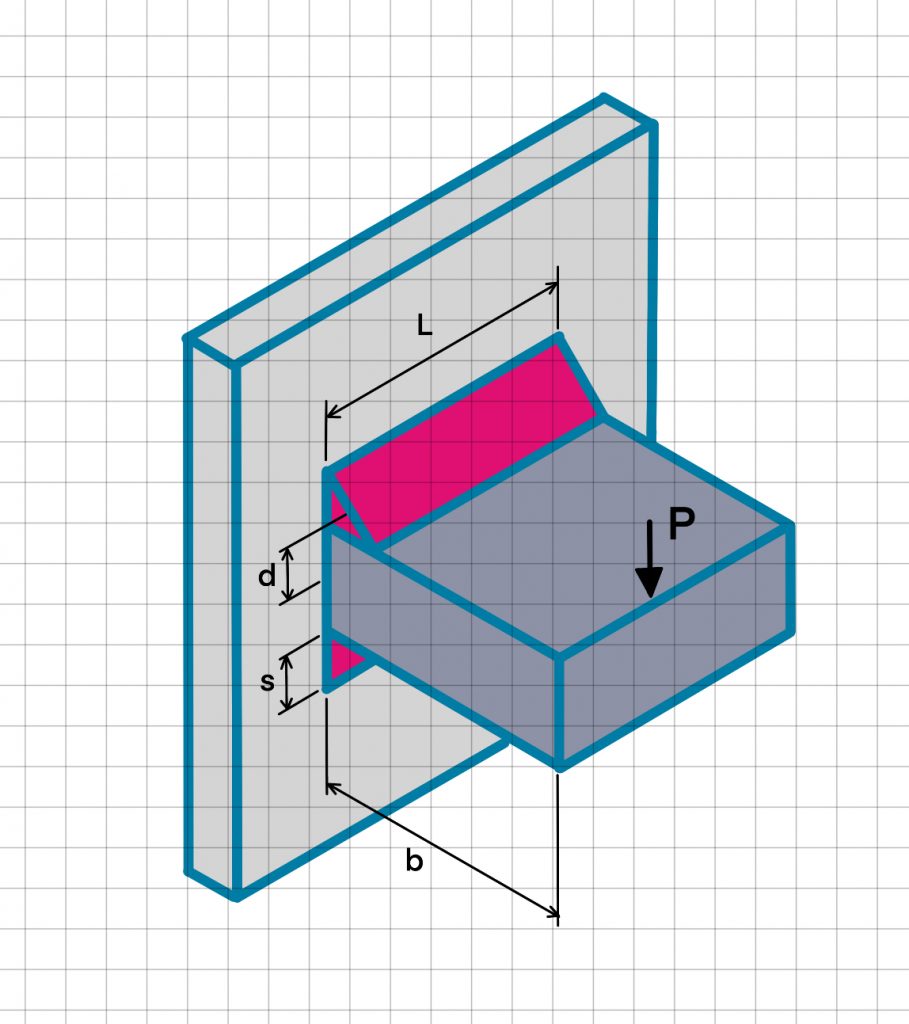
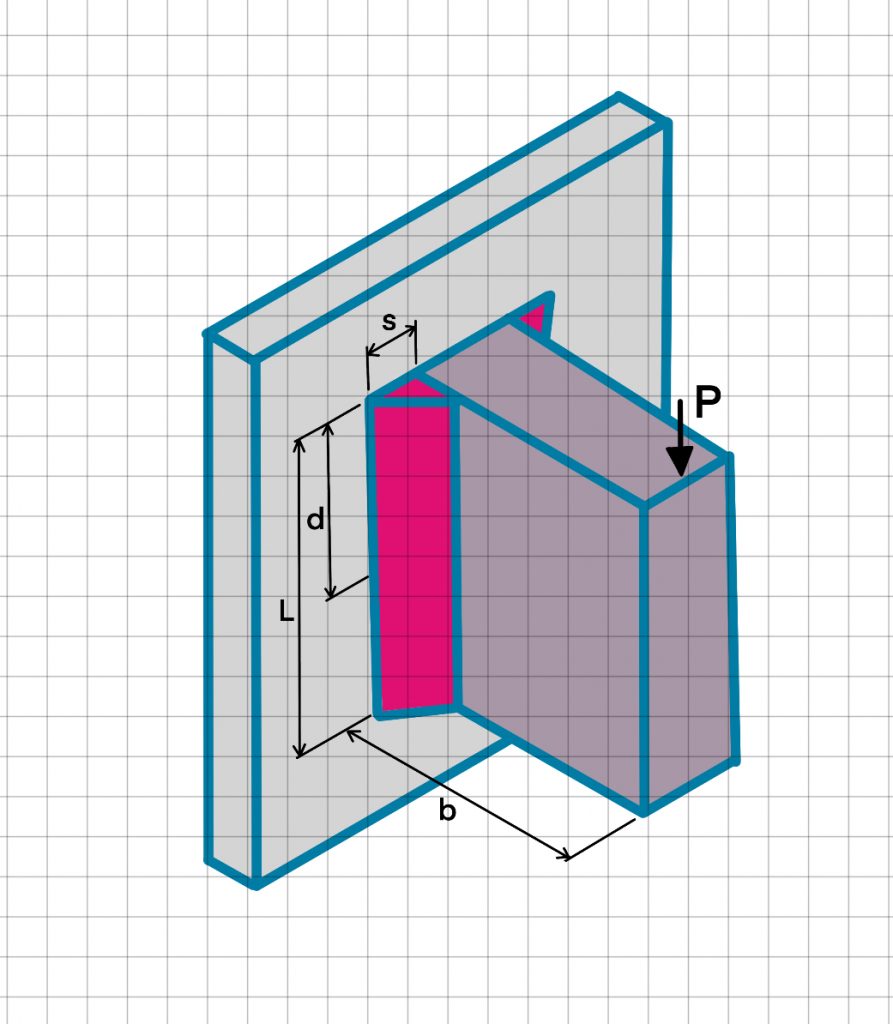
In the following we have considered a fillet weld connection supporting a cantilevered bar carrying a load at its free end.
For this load case we can consider two scenarios: one where the fillet welds are perpendicular to the applied load, and the other where the fillet welds are parallel to the applied load.
Case 1
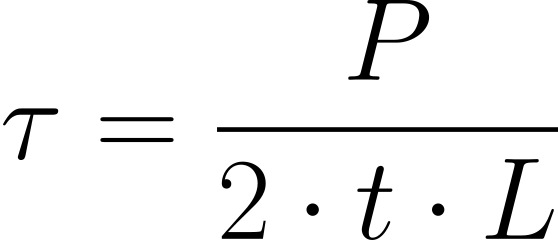
Shear stress in weld:
Bending stress in weld:
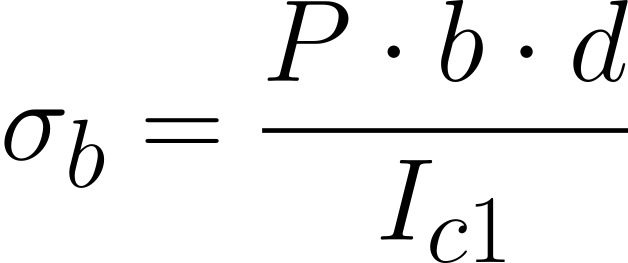
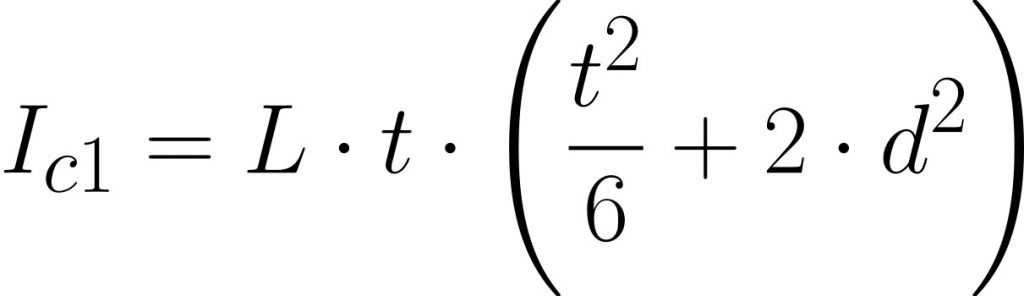
where I is the second moment of area of the two welds about its centroid:
Case 2
Shear stress in weld:

Bending stress in weld:
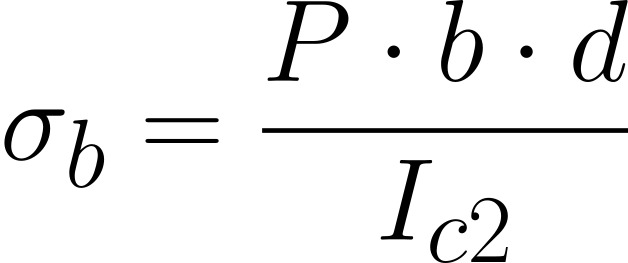
d=distance from neutral axis
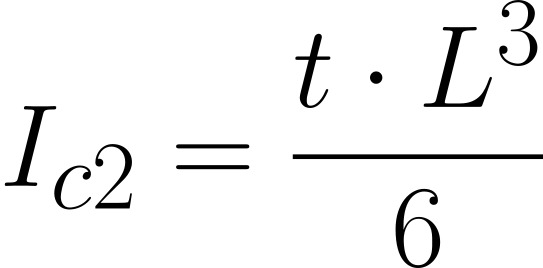
where I is the second moment of area of the two welds about its centroid:
Torsional Load Case
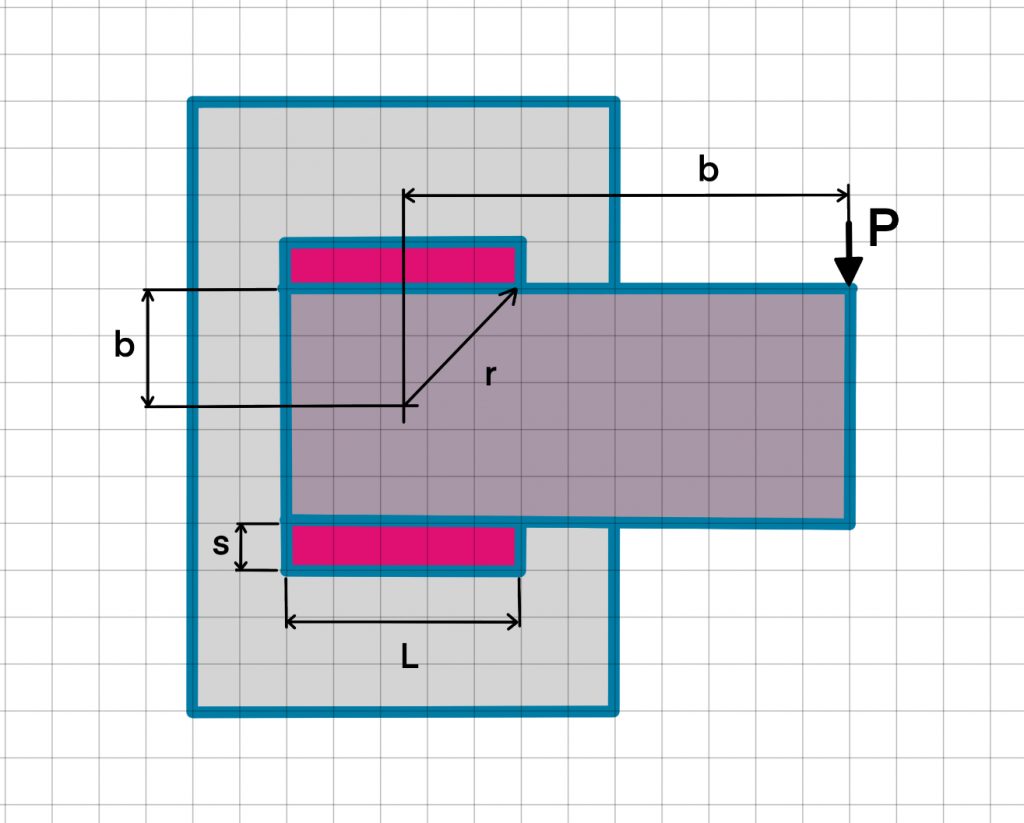
Consider a fillet weld connection carrying an applied load P, as shown below, this will result in both a torsional (torque) and shear force in the weld.
The stresses acting on the weld can be calculated as follows:
Shear stress in weld:

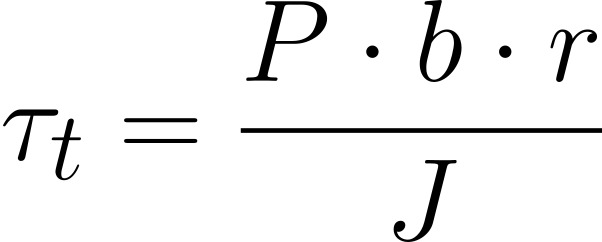
Torsional shear stress in weld:
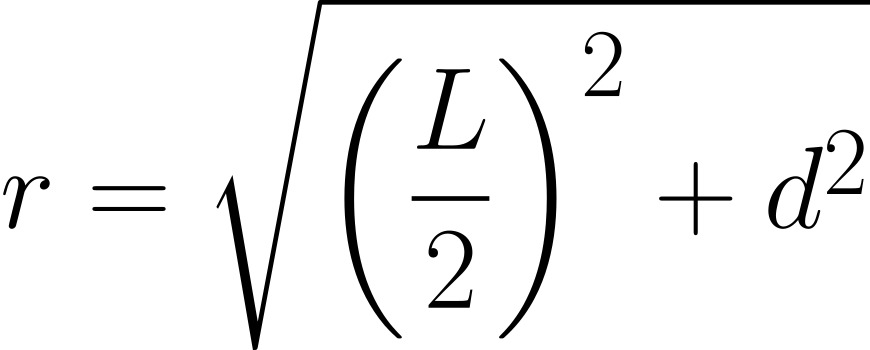
where r is the maximum radial distance of weld to its centroid:
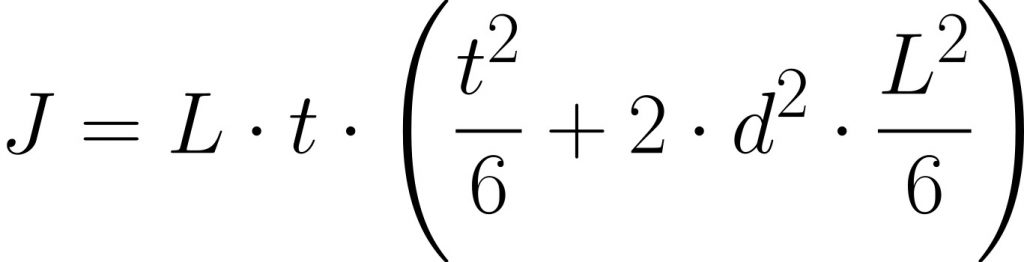
and J is the polar moment of inertia of the two welds about its centroid:
Leave a Reply
You must be logged in to post a comment.