
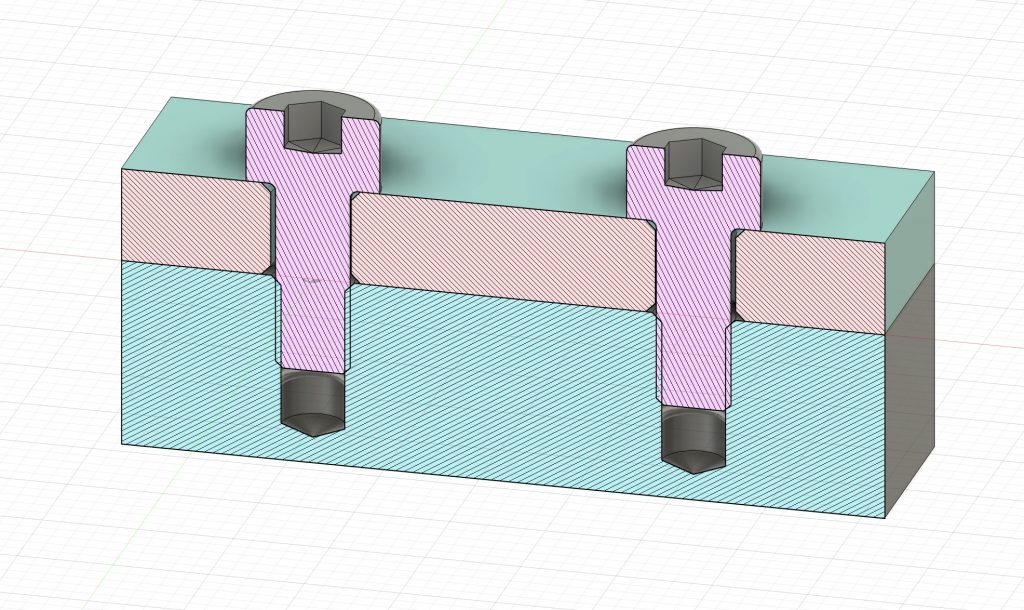
Standardising hole sizes across engineering designs offers several important advantages:
- Reduced tooling costs – Manufacturing facilities can maintain a smaller inventory of drill bits and cutting tools
- Improved manufacturing efficiency – Machine operators spend less time changing tools and can develop consistent processes
- Enhanced interchangeability – Components from different manufacturers or production runs can be used interchangeably when hole sizes are standardized
- Lower risk of errors – Using standard hole sizes reduces the chance of assembly mistakes or incorrect tooling selection
Metric Fastener Hole Size
(No Doweling Feature)
| Fastener | Pin Diameter | Hole Size | Hole Tolerance | Positional Tolerance |
|---|---|---|---|---|
| M3 | 3.00 | 3.25 | +/-0.05 | 0.2 |
| M4 | 4.00 | 4.25 | ||
| M5 | 5.00 | 5.25 | ||
| M6 | 6.00 | 6.25 | ||
| M8 | 8.00 | 8.25 | ||
| M10 | 10.00 | 10.25 | ||
| M12 | 12.00 | 12.25 |
Metric Fastener Hole Size
(With Doweling Feature)
| Fastener | Pin Diameter | Hole Size | Hole Tolerance | Positional Tolerance |
|---|---|---|---|---|
| M3 | 3.00 | 3.45 | +/-0.05 | 0.2 |
| M4 | 4.00 | 4.45 | ||
| M5 | 5.00 | 5.45 | ||
| M6 | 6.00 | 6.45 | ||
| M8 | 8.00 | 8.45 | ||
| M10 | 10.00 | 10.45 | ||
| M12 | 12.00 | 12.45 |
ELEVATE Your knowledge
Check out the links to see:
- How are these tolerances are calculated?
A breakdown of tolerance stack ups calculating the hole size and geometric positional tolerance required. - Example drawings
See how these numbers should be displayed on manufacturing drawings
Leave a Reply
You must be logged in to post a comment.